

Root Canals
In Oklahoma City, OK
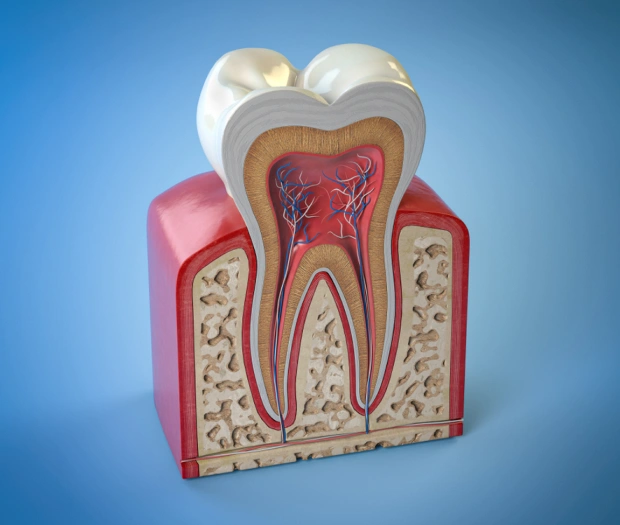
Revitalizing Your Tooth: Root Canal Therapy
Our teeth consist of three key components: dental enamel, dentin, and pulp. The enamel is the outer protective layer, while the dentin is a softer layer beneath it. The pulp, located underneath the dentin, is a delicate tissue containing connective tissue, nerves, and blood vessels.
Under normal circumstances, the pulp is safeguarded by the enamel and dentin. However, when harmful bacteria penetrate this area through deep cavities, fractures, or trauma, infections can develop.
An infected tooth often results in severe pain, which can worsen if left untreated. In such cases, tooth extraction may become necessary, although this is always a last resort.
Missing teeth can lead to various oral health issues, including bone loss and shifting of adjacent teeth. Root canal therapy provides a solution by removing the infection, preserving the natural tooth, and restoring overall oral health. Compared to extraction, root canal treatment typically involves less discomfort and a shorter recovery time.
Root Canal Treatment Indications
Below are some signs to watch out for that may indicate a tooth infection or abscess:
- I am currently suffering from a severe toothache.
- I am facing intense tooth sensitivity.
- My gums are puffy, red, or swollen.
- I am experiencing discomfort or inflammation in my jaw.
- I have noticed a gum bump that resembles a pimple.
- I may have an unpleasant taste or smell in my mouth.
If you observe any of the listed indications and suspect a tooth infection, please contact our dental office in Oklahoma City immediately. An infected root canal requires prompt attention, not only for your comfort but also for the sake of your overall health, safety, and well-being.
What Occurs During a Root Canal?
Don't fear root canals—they're not as daunting as they may seem! At our clinic, we utilize advanced 3-D cone-beam imaging to meticulously plan your treatment. This technology provides a comprehensive view of your tooth from every angle.
With this detailed 3-D perspective, our dentists can accurately evaluate the tooth's structure and customize the procedure to meet your specific needs. By combining this innovative technique with effective anesthesia, we ensure your comfort throughout the process, leading to the best possible results. Most patients experience significant relief immediately after the procedure.