
Restoring Your Tooth: Root Canal Treatment
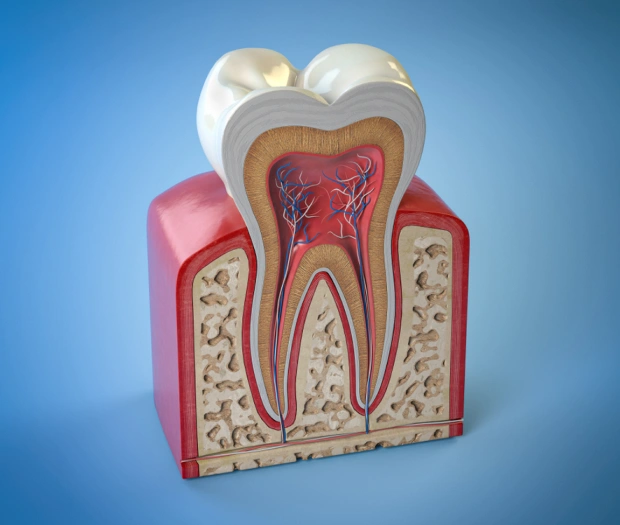
Teeth are made up of three essential layers: enamel, dentin, and pulp. Enamel is the strong outer layer that protects the tooth, while dentin provides additional support beneath it. The pulp, located at the core, contains nerves, blood vessels, and connective tissue, making it vital for tooth health.
Under normal conditions, the enamel and dentin act as protective barriers for the pulp. However, when bacteria enter through deep cavities, cracks, or trauma, an infection can develop, leading to severe pain and complications. If left untreated, the infection can spread, affecting surrounding tissues and potentially leading to abscess formation.
A tooth infection can cause persistent discomfort, which may worsen without timely care. In severe cases, tooth extraction might be necessary. However, losing a tooth can lead to bone loss, shifting of surrounding teeth, and other oral health problems. A root canal procedure helps remove the infection, preserve the natural tooth, and restore function while providing long-term oral health benefits. Compared to extraction, a root canal is less invasive, more comfortable, and allows for a quicker recovery.
Signs You May Need a Root Canal
If you experience any of the following symptoms, you may have a tooth infection that requires immediate attention:
- Severe or persistent tooth pain
- Increased sensitivity to hot or cold
- Swollen, red, or tender gums
- Jaw discomfort or swelling
- A small, pimple-like bump on the gums
- An unpleasant taste or odor in the mouth
Ignoring these symptoms can lead to further complications. If you suspect a tooth infection, contact Four Zero Five Dental Aesthetics in Nichols Hills, OK right away. Early treatment can help save your tooth and prevent further discomfort.
What Happens During a Root Canal?
A root canal may sound intimidating, but modern technology has made the procedure comfortable and highly effective. At Four Zero Five Dental Aesthetics, we utilize advanced 3-D cone-beam imaging to assess the tooth from all angles, ensuring precise treatment tailored to your specific needs. With the use of proper anesthesia and advanced techniques, the procedure is designed to be pain-free and efficient. Many patients experience immediate relief after treatment, and with proper care, the restored tooth can last a lifetime. If you’re experiencing tooth pain or signs of infection, don’t wait—call 405-288-4974 today to schedule an appointment!