
Restoring Your Tooth: Root Canal Treatment
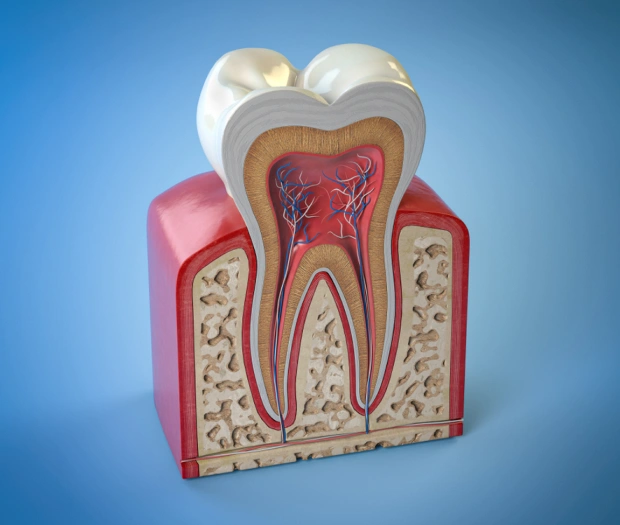
Our teeth are made up of three essential layers: the outer enamel, the softer dentin beneath it, and the pulp, which lies at the core. The enamel serves as a protective barrier, while the dentin provides additional support. Beneath the dentin, the pulp contains vital nerves, blood vessels, and connective tissue.
Typically, the pulp remains protected by the enamel and dentin. However, when harmful bacteria penetrate these layers—due to deep cavities, cracks, or trauma—an infection can form, threatening the health of the tooth and surrounding tissues.
An infected tooth can cause intense pain that may worsen if not treated. In some cases, tooth extraction may be necessary as a last resort.
Having missing teeth can result in oral health problems like bone loss and shifting of nearby teeth. Root canal therapy offers a solution by removing the infection, saving the natural tooth, and improving overall oral health. Compared to extraction, root canal treatment usually causes less discomfort and requires a shorter recovery period.
Root Canal Treatment Indications
Here are some signs to be aware of that could indicate a tooth infection or abscess:
- I am dealing with a persistent toothache.
- I am experiencing heightened tooth sensitivity.
- My gums appear red, swollen, or inflamed.
- I feel discomfort or swelling in my jaw.
- I've noticed a small bump on my gum that looks like a pimple.
- There is an unpleasant taste or odor in my mouth.
If you notice any of these symptoms and suspect a tooth infection, please reach out to our dental office in Piedmont right away. A root canal infection requires swift treatment to ensure your comfort and protect your overall health and well-being.
During a Root Canal Procedure, What Happens?
Root canals aren’t as intimidating as they may sound! At our clinic, we use advanced 3D cone-beam imaging to precisely plan your treatment. This cutting-edge technology offers a detailed, multi-angle view of your tooth, allowing us to assess its structure thoroughly and tailor the procedure to your unique needs. With this innovative approach and effective anesthesia, we prioritize your comfort, ensuring a smooth experience and optimal results. Most patients feel significant relief right after the procedure.