
Tooth Repair with Inlays and Onlays
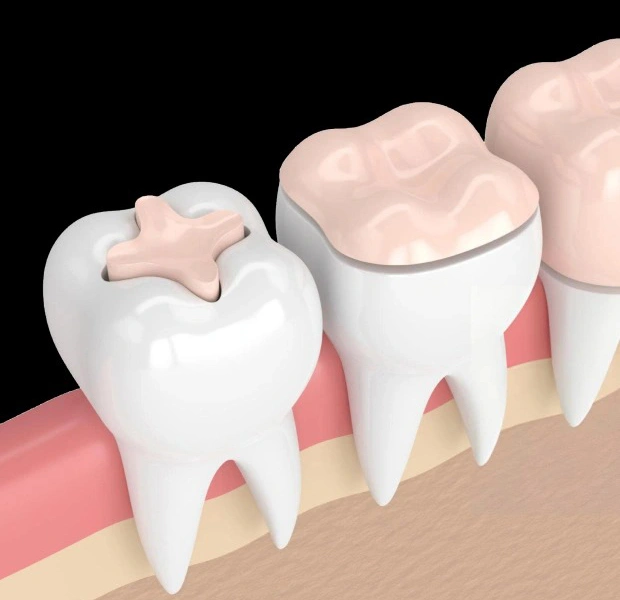
When more than half of a tooth's biting surface is damaged, we usually opt for an inlay or onlay to restore its structure.
Dental Inlays and Onlays: An Overview
Customized dental restorations called inlays and onlays are created using materials such as porcelain, gold, or composite resin. These restorations are attached to the affected part of the tooth. Inlays are positioned within the cusp tips of the tooth, resembling a dental filling. Although gold has been the traditional choice for inlays and onlays, porcelain is becoming more popular due to its durability and ability to blend in with the natural color of teeth.
What is the Application Process for Inlays and Onlays?
You must schedule two appointments to finish the inlays and onlays.
Initial Meeting
On your initial visit, we will extract any damaged or decayed portions of the tooth or current filling and ready it for the inlay or onlay. To guarantee a precise fit and alignment, we will create an impression of the tooth and send it to a lab for production. Following that, Dr. Kooper will apply a temporary sealant to safeguard the tooth until your next visit.
Follow-Up Appointment
During the second appointment, the temporary sealant will be taken off. Dr. Kooper will check the fit of the inlay or onlay. If it fits properly, the inlay or onlay will be attached to the tooth with a durable resin and polished for a smooth finish.
Factors to Think About When Choosing Inlays and Onlays
Did you know that traditional fillings can weaken a natural tooth by up to 50 percent? In contrast, inlays and onlays are bonded directly to the tooth using high-strength resins, increasing its strength by as much as 75 percent. This means they can last between 10 to 30 years. If your tooth damage doesn't require a full dental crown, onlays are a great alternative. Contact our office today at 405-468-9611 in Yukon, OK for more information about our inlays and onlays!